
Moments of Time on a Scale of Space
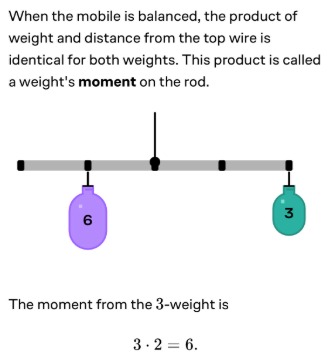
Time is often described as the fabric of existence, flowing uniformly and providing the stage upon which all events unfold. We believe we understand it because we live within it, but this confidence is deceiving. Time, especially when considered alongside mass and motion, is not as straightforward as it seems. By looking at a simple image of a balancing scale, we can explore something profound about how time works—why larger masses “need” fewer moments to maintain equilibrium, while smaller masses “stretch out” time to relate to larger ones. This interplay of time, mass, and moments reveals that time is dynamic, adaptive, and far from the uniform ticking of a clock.
The Scale as a Model for Time
The image of the scale illustrates a mechanical balance system where weights on each side create moments of force (or torque) to achieve equilibrium. Each side’s “moment” is the product of the weight’s mass and its distance from the pivot point. The heavier weight needs to be closer to the pivot (a shorter distance) to balance the lighter weight on the opposite side, which sits farther from the pivot. This mechanical relationship reflects a deeper truth about how time works in the presence of mass.
Now imagine that the weights represent masses in the universe. The larger mass distorts spacetime more profoundly, and its relationship with time “flows” differently than that of the smaller mass. The balance scale becomes an analogy for time dilation, where each side “needs” a different number of discrete moments to maintain balance.
The Larger Mass: Fewer Moments, Slower Time, and Stretched Intervals
On the side of the larger mass:
1. Greater Influence: The larger mass dominates the system simply because it has more weight. It “anchors” the relationship, bending the metaphorical timeline around it.
2. Fewer Moments Required: The larger mass doesn’t need as many discrete intervals of time—its influence is so significant that fewer moments suffice to maintain balance on the scale.
3. Slower Time: The Clock as the Smaller Object Balancing the Larger Mass
Imagine the system as a balancing scale, with the larger mass on one side and a clock (a smaller object) on the other. To balance the massive gravitational influence, the clock slows its ticking. This “slowing” does not mean there are fewer moments; rather, it means more moments are stretched out between each tick.
• Near the larger mass, spacetime is profoundly curved, and time dilates. The clock stretches its moments to bridge the gravitational relationship.
• From the clock’s perspective, everything seems normal, as time always feels constant locally. However, to an external observer, the moments accumulate more slowly, appearing as if the clock itself ticks slower.
Relating to the Scale
In the scale analogy, the larger mass is positioned closer to the pivot, requiring fewer moments (force x distance) to balance. Similarly, in the universe, the larger mass bends spacetime deeply, requiring the clock on the other side to stretch its moments between each tick, effectively mirroring this balance. The larger mass’s dominance compresses time near it, while the smaller object compensates with stretched, slower moments.
The Smaller Mass: More Moments, Stretched Time
On the side of the smaller mass:
1. Less Influence: The smaller mass exerts less gravitational influence, so it must compensate by being positioned farther from the pivot. It needs to “work harder” to balance the larger mass.
2. More Moments Required: To achieve equilibrium, the smaller mass requires more moments—discrete intervals of time that “add up” to counterbalance the dominance of the larger mass.
3. Stretched Time: This corresponds to the experience of time dilation in reverse: near less massive objects, spacetime curvature is weaker, and time flows more freely. The smaller mass’s perspective involves a denser accumulation of moments, making it appear as though time is “faster” relative to the larger mass.
• The clock on the smaller object’s side ticks more quickly, not because time is fundamentally different, but because spacetime curvature allows for a greater frequency of moments.
• Relating this back to the scale: the smaller object compensates for its weaker gravitational pull by “filling in the gaps” with more moments. This is why it must be farther from the pivot point—it creates balance through a greater quantity of moments spread out over a greater distance.
The Bridge Between Mass, Moments, and Time
The scale illustrates a core idea in both mechanics and relativity: equilibrium is achieved through the interplay of mass, distance, and moments. In a gravitational system, the same concept applies, but with time as the balancing factor:
• Massive objects “compress” their need for moments. Their sheer gravitational influence slows down time, elongating the moments between each tick.
• Smaller objects “expand” their need for moments. To balance the larger mass, time stretches out, creating more frequent and denser moments that compensate for the smaller gravitational influence.
This interplay reflects how spacetime adjusts dynamically to balance interactions between masses. Time is not a passive backdrop but an active participant, reshaping itself based on mass and gravitational relationships.
The Fundamental Insight: Time as Adaptive
The profound takeaway is that time is not universal or uniform—it is adaptive. It responds to mass, bending and stretching to maintain equilibrium in the universe. This is why:
1. Near a massive object, time slows down, with stretched intervals between moments. The clock compensates by adjusting its ticking, stretching its moments to align with the larger mass’s dominance.
2. For less massive objects, time flows more freely, allowing for more frequent moments to fill in the gaps. The clock in this case adjusts by ticking more quickly, aligning with the weaker spacetime curvature.
This duality of time—slowing down for the massive and expanding for the less massive—mirrors the mechanical balance of the scale. It provides a vivid way to understand time dilation, a concept that often feels abstract but is deeply embedded in the way the universe operates.
Why We Think We Understand Time (But Don’t)
Time feels intuitive because we live within it, but our everyday experience is limited to uniform, linear flows. The scale analogy shatters this illusion, showing that time is:
1. Relative: It flows differently for different masses, just as the moments on each side of the scale vary to achieve balance.
2. Dynamic: Time is not a fixed stage but reshapes itself in response to mass and motion, adapting to maintain equilibrium.
3. Fundamental but Hidden: Like the invisible moments balancing the scale, time operates beneath the surface, adjusting itself in ways that are not immediately obvious.
Most people think of time as a constant, but the scale analogy reveals its true nature: time is a relational phenomenon, bridging differences in mass and distance through the distribution of moments.
Conclusion: Time and Balance
The image of the scale offers a profound lens to understand time. Larger masses dominate with fewer, stretched moments, while smaller masses expand their moments to compensate. This balancing act mirrors the nature of time in the universe, where mass and motion shape its flow.
Time is not simply a ticking clock; it is an adaptive, dynamic force that ensures balance in a system where no two masses are equal. By understanding this, we gain a deeper appreciation of how time truly works—not as something fundamental we can fully grasp, but as a dynamic relationship that underpins the very structure of reality.
